

Orthopedic Care
Knee pain is a symptom, not a diagnosis. The same ache behind the kneecap can come from worn cartilage, a torn meniscus, an inflamed bursa, a strained tendon, or pain referred from the hip or back — and each needs different treatment. Treating them all with the same painkiller and the same exercises is why knee pain so often drags on for months.
At Noida Orthopedic Clinic, Sector 26, Noida, Dr. Amit Aggrawal examines the knee, correlates it with any imaging, and explains which structure is causing the pain and what will actually settle it — most knee pain does not need surgery.
Common Causes of Knee Pain
Where the pain sits, when it comes and how the knee behaves narrows the cause quickly. The table below shows the patterns seen most often in clinic.
| Condition | Typical pattern | Common in |
|---|---|---|
| Osteoarthritis | Gradual ache, worse with walking and stairs, morning stiffness under 30 minutes, grinding | Adults over 45, higher body weight, previous knee injury |
| Meniscus tear | Sharp pain on one side of the joint, catching or locking, worse on twisting or squatting | Twisting injury in sport; degenerate tears in middle age with no injury |
| ACL or ligament injury | Pop at the time of injury, rapid swelling, knee feels unstable or gives way | Football, basketball, badminton, skiing, road accidents |
| Patellofemoral pain | Dull pain around or under the kneecap, worse on stairs, squatting and sitting long | Young adults, runners, cyclists |
| Tendonitis (patellar or quadriceps) | Localised pain at the tendon, worse at the start of activity and after rest | Jumping and running sports, sudden increase in training |
| Bursitis | Swelling and tenderness over the front of the kneecap, worse on kneeling | Prolonged kneeling, direct pressure, infection |
| Rheumatoid or inflammatory arthritis | Several joints, morning stiffness over an hour, warmth, fatigue | Younger to middle-aged adults; needs rheumatology input |
| Referred pain | Knee pain with hip or back symptoms; knee examination normal | Older adults with hip arthritis or lumbar spine disease |
Knee Pain Warning Signs: When to Be Seen Quickly
Most knee pain can wait for a routine appointment. These features should not:
- The knee is hot, red, very swollen and you have fever — possible joint infection, which needs same-day assessment.
- You cannot bear weight after an injury, or the knee looks visibly deformed.
- The knee locks in one position or gives way repeatedly.
- Swelling came on within a few hours of an injury (suggests blood in the joint, often a ligament tear).
- Calf pain and swelling after surgery, immobility or long travel — possible clot.
- Night pain that wakes you, with unexplained weight loss.
In these situations, imaging and treatment should not be delayed while trying home remedies.
What You Can Do Before the Consultation
For pain after a recent twist or strain, relative rest for 48 to 72 hours, ice for 15 to 20 minutes a few times a day (wrapped in cloth, never directly on skin), compression and elevation reduce swelling. Avoid complete bed rest beyond a couple of days — gentle movement and straight-leg exercises keep the thigh muscle working.
For longer-standing arthritis pain, the useful measures are the unglamorous ones: walking and cycling rather than running and jumping, losing weight if you are overweight (each kilogram lost meaningfully reduces load on the knee), strengthening the quadriceps and glutes, and using a stick if it lets you walk further with less pain. Heat helps stiffness; ice helps a hot, swollen knee.
How Knee Pain Is Diagnosed
Diagnosis is clinical first. The examination checks where exactly it hurts, whether there is fluid in the joint, how far the knee bends and straightens, whether the ligaments are stable, and how the kneecap tracks. That examination usually decides which test, if any, is needed.
- X-ray — joint space, alignment, arthritis grade and bone lesions; done standing where possible.
- MRI — for suspected meniscus, ligament, cartilage or tendon injury, and for persistent pain with a normal X-ray.
- Blood tests — when inflammatory arthritis, gout or infection is suspected.
- Ultrasound — useful for fluid, bursitis and tendon problems, and to guide injections.
An MRI report is not a diagnosis by itself. Many middle-aged knees show “degenerate meniscal tears” and cartilage changes that cause no symptoms, so the scan is always read alongside the examination.
Non-Surgical Treatment Options
Most knee pain is treated without an operation, and the order matters: the measures with the fewest risks are tried first.
- Activity modification and load management — reduce what provokes the pain rather than stopping activity altogether.
- Physiotherapy — strengthening, balance and gait work; the single most effective long-term treatment for arthritis and patellofemoral pain.
- Medication — paracetamol and short courses of anti-inflammatory drugs, used with attention to stomach, kidney and heart risk; topical gels for localised pain.
- Weight management — reduces pain and slows arthritis progression.
- Braces, insoles and walking aids — for specific problems such as patellar instability or medial compartment overload.
- Injections — corticosteroid for a flare, hyaluronic acid in selected patients, and PRP or GFC where appropriate. Injections relieve symptoms for a period; they do not regrow cartilage.
Supplements and “cartilage repair” products are widely marketed but have weak evidence; they are not a substitute for strengthening and weight control.
When Surgery Is Actually Needed
Surgery treats mechanical problems, not pain in general. It is considered when a specific structure is damaged and is causing the symptoms: a meniscus tear that locks the knee, a ruptured ACL with instability in a sportsperson, a loose fragment, a tendon that has torn, or advanced arthritis that has stopped responding to everything above.
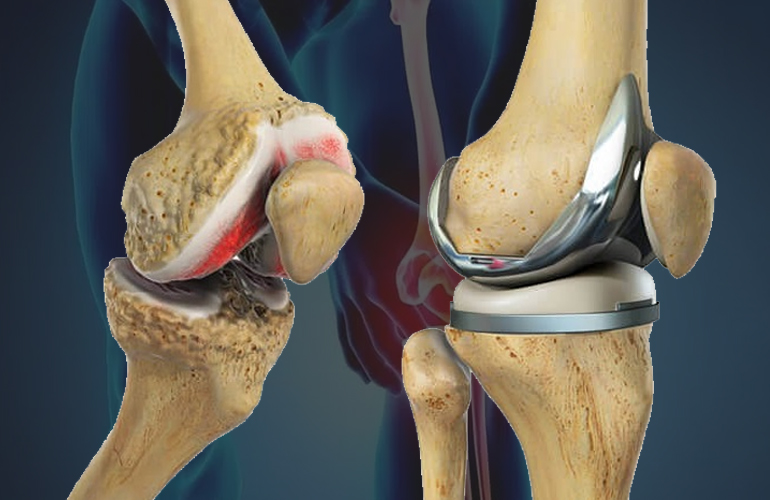
The options then are arthroscopy for meniscus, ligament and cartilage problems, and knee replacement for advanced arthritis. Surgery is not a shortcut for knee pain of unclear cause — an operation performed without a clear diagnosis is the commonest reason a knee does not improve.
Knee Pain in Different Age Groups
Under 30, pain usually follows sport or injury: patellofemoral pain, ligament sprains, meniscus tears, tendon overload. Between 30 and 50, degenerate meniscus tears, early arthritis and tendon problems become common, and the distinction between a tear that needs surgery and one that needs rehabilitation matters. Above 50, osteoarthritis dominates, often with a degenerate meniscus, and treatment is directed at the arthritis rather than at the incidental tear on the MRI.
In older adults, hip arthritis and lumbar spine disease frequently present as knee pain. If the knee examination is unremarkable but walking is limited, the hip and back need examining too.
Preventing Knee Pain From Returning
Once the acute problem settles, keeping the knee comfortable is mostly about strength and load. Maintain thigh and hip strength with simple exercises two or three times a week, keep body weight in a healthy range, progress training gradually rather than in weekend bursts, and warm up before sport. Cycling, swimming, walking and cross-training protect the knee better than running on hard surfaces with poor footwear.
If a knee swells after activity, it is telling you the load was too much — reduce it for a week and build again, rather than pushing through.
Knee Pain Consultation in Noida
An assessment at Noida Orthopedic Clinic in Sector 26 includes history, examination and review of any X-rays or MRI you already have, with a clear explanation of the likely cause and a treatment plan you can follow. If imaging is needed, it is arranged deliberately rather than routinely.
Bring your previous reports and a list of medicines you take. If you have been told you need surgery elsewhere, a second opinion is welcome — many patients are treated successfully without an operation.
Why Choose Noida Orthopedic Clinic
- Diagnosis based on examination, not the MRI report alone
- Non-surgical treatment first wherever possible
- Physiotherapy and weight-management guidance
- Injections including PRP and GFC where suitable
- Clear advice on when surgery is genuinely needed
- Second opinions for recommended knee operations
Frequently Asked Questions
What is the most common cause of knee pain?
In adults over 45 it is osteoarthritis. In younger and sporty patients it is usually patellofemoral pain, a meniscus tear or a ligament injury. The pattern of pain and an examination distinguish them.
When should I see a doctor for knee pain?
See an orthopedic doctor if pain lasts more than two weeks, keeps returning, or comes with swelling, locking, instability, inability to bear weight, or pain after an injury. Fever with a hot swollen knee needs same-day care.
Can knee pain be treated without surgery?
Yes — most knee pain is. Activity modification, physiotherapy, strengthening, weight management and medication, with injections in selected cases, relieve symptoms in the large majority of patients.
Do I need an MRI for knee pain?
Not always. An X-ray and examination answer most arthritis questions. MRI is used when a meniscus, ligament, cartilage or tendon injury is suspected, or when pain persists without a clear cause.
Are knee injections safe?
Corticosteroid injections give short-term relief and are generally safe when not repeated too often. PRP and GFC use your own blood products with a lower risk profile but more variable evidence. All injections carry a small risk of infection and a temporary rise in blood sugar.
Does walking make knee arthritis worse?
No. Regular walking and cycling are recommended for knee arthritis — they maintain strength and cartilage nutrition. Pain that persists for more than a day after a walk suggests reducing distance or pace temporarily rather than stopping.
Which exercises are best for knee pain?
Straight-leg raises, sit-to-stand, step-ups, glute bridges and stationary cycling suit most knee problems. The right programme depends on the diagnosis, so it should be prescribed after examination rather than copied from the internet.